
Archive and Library Humidity Control Systems
Environmental Stability for Records and Collections

Application Overview
Archives and libraries store materials that are highly sensitive to humidity variation. Damage is often caused not by extreme conditions but by repeated fluctuations over time.
Humidity control in archival environments is therefore focused on stability and predictability rather than rapid correction.
-
Humidity Challenges and Risks
- Design Intent and Control Objectives
- Degradation of paper, bindings, and media
- Mold growth in elevated humidity
- Brittleness and shrinkage in dry conditions
- Long-term preservation risk due to instability
The objective is to maintain a stable humidity environment with minimal short-term variation. Control systems should operate gently and consistently.
Technology Selection Considerations
Both desiccant and refrigeration-based systems may be applied depending on required stability, operating temperature, and system integration. Selection is driven by control philosophy rather than absolute performance.
Psychrometric Perspective (Application Specific)
Archival preservation depends on maintaining equilibrium moisture content in materials. Rapid humidity changes are more damaging than steady conditions outside ideal targets.
Typical System Configuration
- Dedicated humidity control systems
- Low-velocity air distribution
- Zoned control for storage and access areas
Product Mapping for Archive Applications
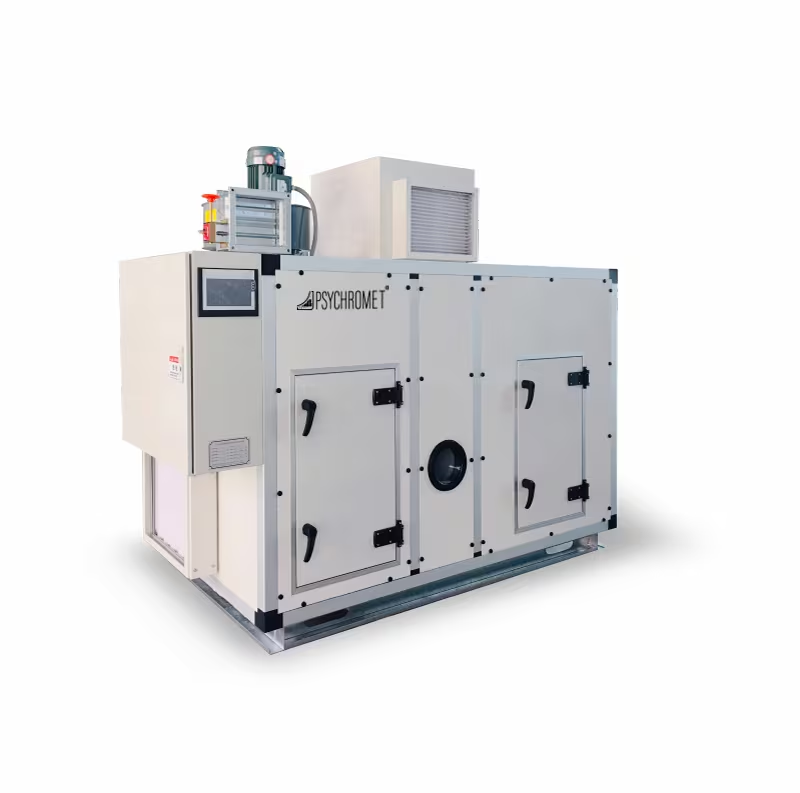
Psychromet offers humidity control solutions suitable for archival and library environments.
Why Psychromet
Psychromet supports archival projects with preservation-focused humidity control strategies.
Discuss Your Archive Project
Contact our engineering team for archive and library humidity control guidance.