
Cold Store Dehumidification Systems
Moisture and Frost Control for Cold Storage Facilities

Cold Storage Humidity Control
Cold storage facilities operate at low temperatures where uncontrolled moisture can readily condense or freeze on cold surfaces. This leads to ice formation, safety hazards, product damage, and increased energy consumption.
Humidity control in cold stores is therefore not a comfort requirement but a critical operational and safety function focused on moisture and frost prevention.
-
Humidity Challenges and Risks
- Design Intent and Control Objectives
Cold store environments typically face the following challenges:
- Moisture ingress through door openings and loading docks
- Condensation and ice formation on floors, evaporators, and structures
- Slippery surfaces creating safety risks for personnel
- Reduced heat transfer efficiency due to ice buildup
- Increased defrost cycles and refrigeration energy consumption
These issues intensify with frequent door operation and high traffic conditions.
The primary objective in cold storage applications is to prevent condensation and frost formation by controlling the moisture content of air before it contacts cold surfaces.
This requires:
- Dew point control rather than relative humidity control
- Stable operation under continuous infiltration loads
- Coordination with refrigeration and air circulation systems
Effective moisture control improves safety, protects equipment, and supports efficient refrigeration operation.
Psychrometric Perspective (Application Specific)
From a psychrometric perspective, cold stores require air to be dried to a sufficiently low dew point before it enters cold zones.
Moisture removal upstream of cold surfaces prevents condensation and ice formation, improving visibility, safety, and system reliability.
Humidity Challenges and Risks
Cold store environments typically face the following challenges:
- Moisture ingress through door openings and loading docks
- Condensation and ice formation on floors, evaporators, and structures
- Slippery surfaces creating safety risks for personnel
- Reduced heat transfer efficiency due to ice buildup
- Increased defrost cycles and refrigeration energy consumption
These issues intensify with frequent door operation and high traffic conditions.
Design Intent and Control Objectives
The primary objective in cold storage applications is to prevent condensation and frost formation by controlling the moisture content of air before it contacts cold surfaces.
This requires:
- Dew point control rather than relative humidity control
- Stable operation under continuous infiltration loads
- Coordination with refrigeration and air circulation systems
Effective moisture control improves safety, protects equipment, and supports efficient refrigeration operation.
Technology Selection Considerations
Cold store environments impose significant limitations on conventional refrigeration-based dehumidification due to low operating temperatures.
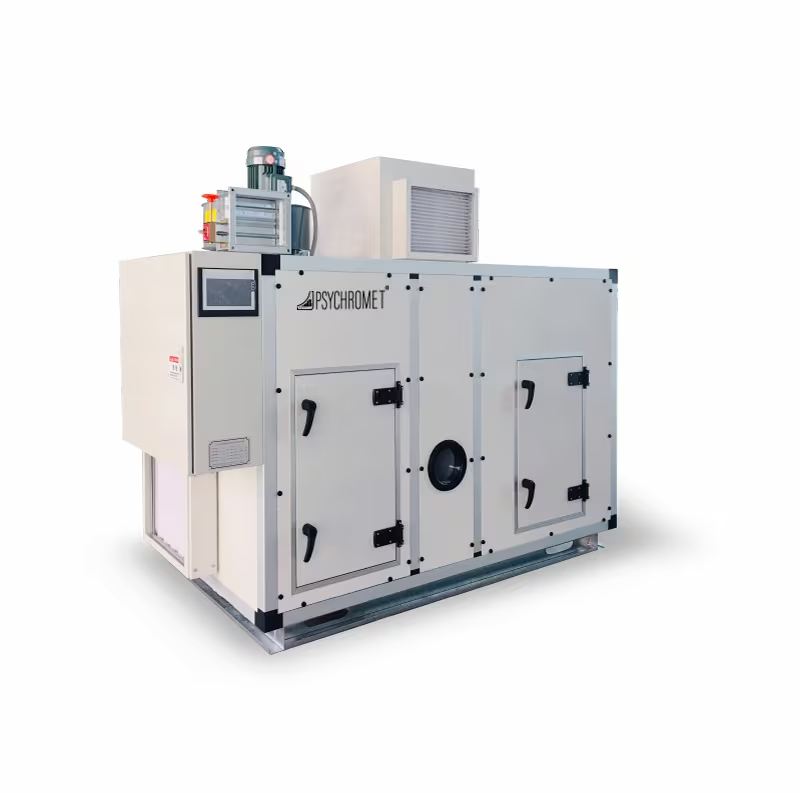
Desiccant dehumidification systems are commonly applied in cold storage facilities because they can remove moisture independently of air temperature and remain effective where cooling coils would frost or lose capacity.
Technology selection should consider infiltration patterns, operating temperatures, and integration with existing refrigeration systems rather than equipment type alone.